
The advent of autonomous systems marks a critical inflection point in human history, akin to the industrial revolution or the dawn of the internet age. Fueled by exponential progress in artificial intelligence (AI), machine learning, sophisticated sensor technology, and pervasive connectivity, these intelligent machines are migrating from the confines of specialized research labs and tightly controlled factory floors into every facet of commercial operation and daily life. Autonomous systems, by definition, possess the capability to perform tasks or a sequence of tasks with minimal or no human intervention, making independent decisions based on real-time data and sophisticated algorithms.
This fundamental shift from mere automation—where machines follow programmed, rigid instructions—to genuine autonomy, where systems can adapt, learn, and self-optimize, is now irrevocably reshaping every industry sector globally. The economic impact is projected to be immense, with some estimates placing the value of robotics and autonomous systems (RAS) in the trillions of dollars in the coming years. Understanding this transformation is no longer a matter of future planning; it is a prerequisite for survival and growth in the contemporary competitive landscape.
Defining the Core of Autonomous Technology
To truly grasp the magnitude of this revolution, it is essential to distinguish autonomous systems from their predecessors. While traditional automation involves processes that are highly efficient but lack the ability to handle unexpected variation, autonomy introduces a level of intelligence and adaptability that mimics, and in some cases, surpasses human decision-making capabilities.
A. Core Components Driving Autonomy
Autonomous systems are complex assemblies, typically relying on a fusion of several key technologies:
A. Artificial Intelligence and Machine Learning (AI/ML): This is the “brain” of the autonomous system. AI and ML algorithms enable the system to process vast amounts of sensory data, recognize patterns, and make informed decisions. Deep learning, a subset of ML, is particularly vital for tasks like image recognition and natural language processing, which are crucial for a system to perceive and interact with its environment.
B. Advanced Sensor Technology and Perception: Systems rely on an array of sensors—Lidar, Radar, cameras, acoustic sensors, and others—to gather detailed information about their surroundings. Robust perception algorithms fuse this multi-modal data to create a high-fidelity, real-time map of the operating environment, allowing the system to understand its context.
C. Edge Computing and Fast Decision-Making: For time-critical operations, such as guiding a self-driving vehicle or managing a complex robotic surgery, decisions must be made in milliseconds. Edge computing allows for AI processing to occur directly on the device, reducing latency and enabling faster, more autonomous operation without constant reliance on a centralized cloud.
D. Seamless Connectivity and Interoperability: Technologies like 5G provide the necessary bandwidth and low latency for multiple autonomous agents to communicate with each other and with human oversight systems. This networking capability is vital for creating interconnected ecosystems, such as a smart factory or an optimized logistics network.
E. Robotics and Mechanical Actuation: This is the physical realization of the system’s decision-making. High-precision robotics, including sophisticated manipulators, drones, and autonomous mobile robots (AMRs), execute the tasks planned by the AI core.
Sector-Specific Transformations and Innovations
The impact of autonomous systems is not uniform; it manifests uniquely within different industries, addressing sector-specific challenges and unlocking new growth opportunities.
1. Transportation and Logistics: The Driverless Future
Perhaps the most visible sign of the autonomous revolution is the rapid evolution of transportation. Beyond the hype of passenger self-driving cars, the most significant changes are occurring in commercial logistics.
A. Autonomous Freight and Long-Haul Trucking: Self-driving trucks are poised to address critical labor shortages and dramatically improve efficiency in long-haul shipping. These systems can operate around the clock, reducing delivery times and fuel consumption through optimized routing and consistent driving patterns.
B. Drone and Last-Mile Delivery Systems: Automated aerial drones and ground-based delivery robots are revolutionizing the “last mile” of the supply chain, particularly in urban and remote areas. Companies are piloting systems for rapid delivery of lightweight goods, medical supplies, and food, promising unprecedented speed and cost-efficiency.
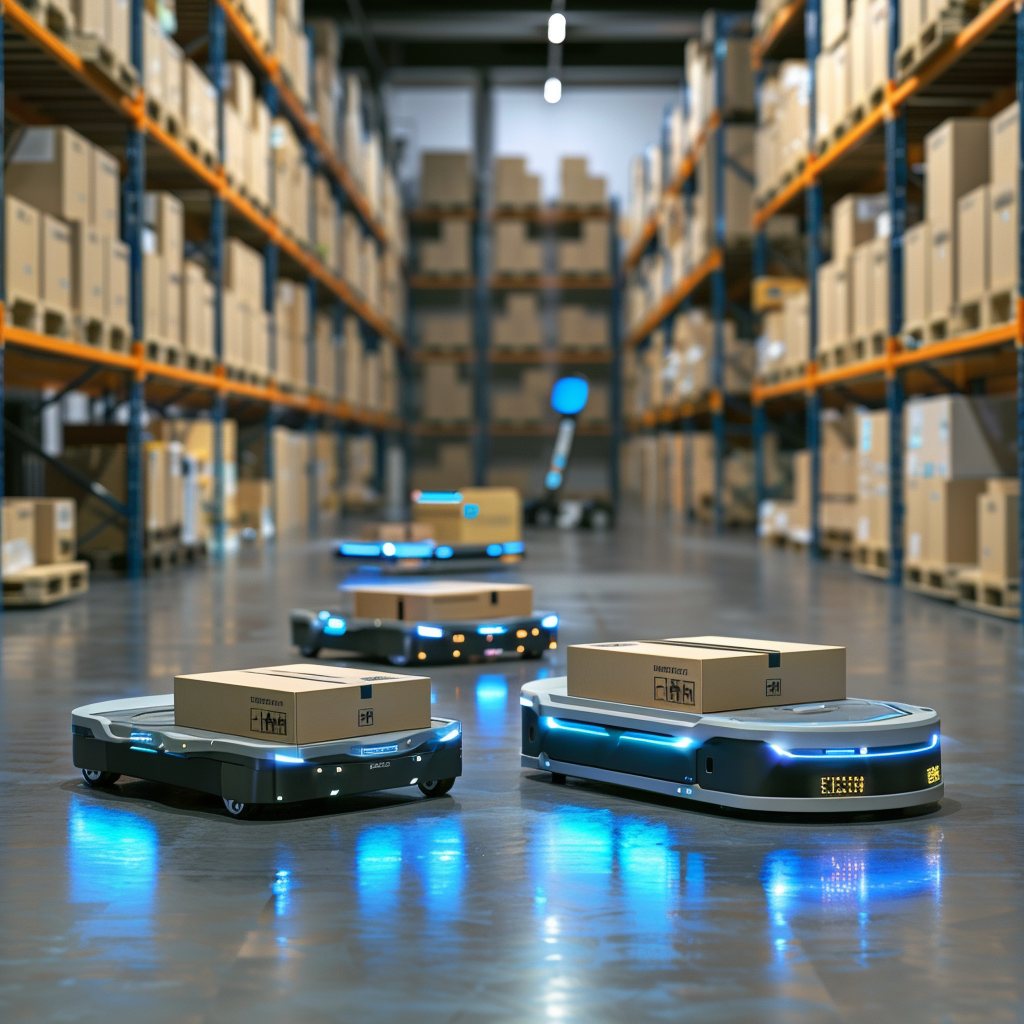
C. Intelligent Warehouse and Port Operations: Inside the logistical hubs, autonomous systems are already standard. Automated Guided Vehicles (AGVs) and more advanced Autonomous Mobile Robots (AMRs) manage inventory, move pallets, and sort packages. Ports are utilizing autonomous cranes and yard vehicles to move containers, dramatically increasing throughput and safety in dangerous work environments.
2. Manufacturing and Production: The Smart Factory
The manufacturing sector, historically a pioneer in automation, is moving toward the concept of the “Smart Factory,” where entire production lines can self-optimize and adapt in real-time.
A. Hyper-Flexible Production Lines: Autonomous manufacturing systems can personalize designs and reconfigure production processes on the fly without extensive human intervention. This enables efficient production of small, customized batches (often referred to as ‘lot size one’), catering to the growing demand for personalization.
B. Predictive Maintenance and Quality Control: Autonomous sensors and AI monitor production quality continuously, detecting anomalies and predicting equipment failure before it occurs. This shift from reactive to predictive maintenance minimizes costly downtime and improves overall product consistency.
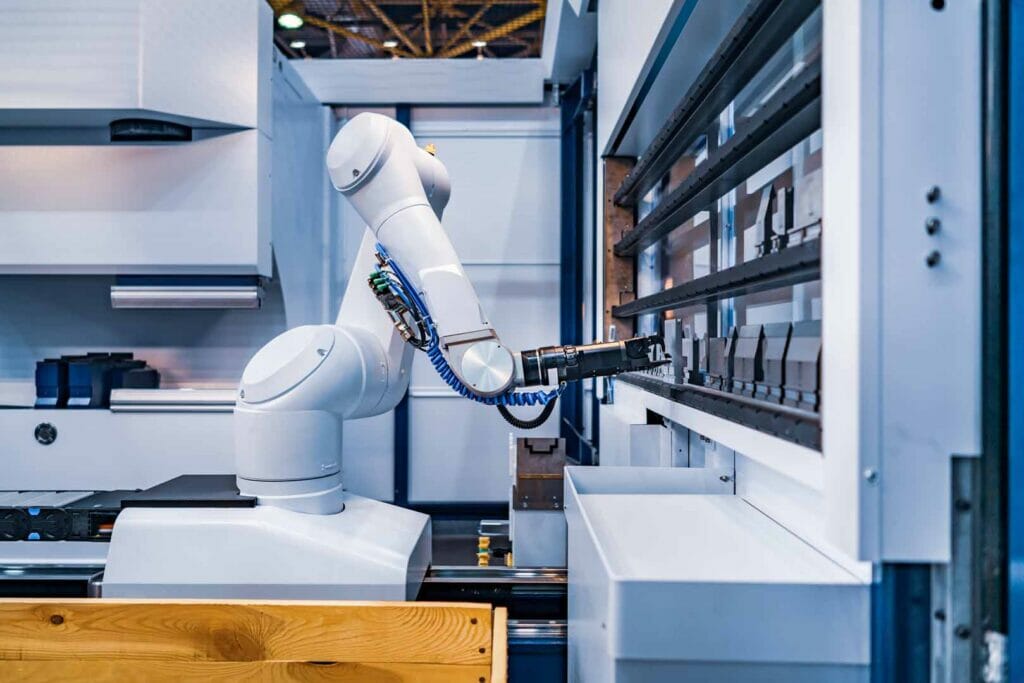
C. Collaborative Robots (Cobots) and Human-Robot Interaction: The new generation of robotics involves cobots designed to safely share the workspace with human employees. These systems handle repetitive or physically demanding tasks, freeing up human workers to focus on higher-value activities such as problem-solving, process optimization, and complex assembly.
3. Healthcare and Medicine: Precision and Safety
Autonomous systems are transforming healthcare, offering the potential for more accurate diagnostics, safer surgeries, and more efficient hospital operations.
A. Autonomous Surgical Robotics: Robotic systems, often guided by human surgeons but capable of micro-precise movements, are standardizing complex procedures, leading to less invasive surgeries, reduced recovery times, and fewer complications. Future systems are expected to gain greater autonomy in performing defined parts of a procedure.
B. AI-Powered Diagnostics and Image Analysis: Autonomous AI systems analyze medical images (X-rays, MRIs, CT scans) and pathology slides with extraordinary speed and accuracy, often identifying subtle patterns indicative of disease (such as early-stage cancer) that might be missed by the human eye.
C. Hospital Logistics and Drug Dispensing: Within hospital environments, autonomous mobile robots are used to transport linens, deliver meals, and distribute medications, increasing operational efficiency and reducing the risk of human error in drug administration. Automated pharmacies prepare medications with high accuracy, further enhancing patient safety.
4. Agriculture and Food Production: Precision Farming
Facing increasing global food demand and the challenges of climate change, the agricultural industry is embracing autonomy to increase yields and sustainability.
A. Autonomous Tractors and Harvesting Equipment: Self-driving tractors, equipped with GPS and sensor arrays, can precisely plant, monitor, and harvest crops, minimizing waste and maximizing land utilization.
B. Precision Crop Management: Drones and ground-based robots use machine vision and AI to monitor individual plant health, applying water, fertilizer, and pesticides only where needed. This “precision farming” reduces the overall use of resources and minimizes environmental impact.
C. Automated Indoor Farming: In controlled environment agriculture (vertical farms), autonomous systems manage every life stage of a crop—from light exposure and nutrient delivery to harvest—allowing for year-round production regardless of external climate conditions.
5. Energy and Utilities: Infrastructure Resilience
Autonomous systems are crucial for monitoring, inspecting, and maintaining critical energy infrastructure, often in hazardous or remote locations.
A. Autonomous Inspection Drones: Drones are used to inspect wind turbines, solar farms, oil pipelines, and nuclear facilities. They perform visual and thermal inspections, detecting wear, corrosion, and damage far faster and safer than human teams.
B. Smart Grid Management: AI and autonomous algorithms manage and balance the modern electrical grid, which increasingly incorporates intermittent renewable energy sources. These systems predict demand fluctuations and optimize energy flow in real-time to ensure stability and reduce waste.
C. Subsea and Remote Facility Maintenance: Remotely operated vehicles (ROVs) and autonomous underwater vehicles (AUVs) perform complex maintenance and inspection tasks on subsea oil and gas infrastructure, reducing the risks associated with deep-sea human operations.
Societal and Ethical Considerations: Navigating the Future
The integration of autonomous systems, while offering immense benefits, introduces profound societal and ethical dilemmas that must be addressed proactively. The net positive effect on economies that embrace this change is historically evident, yet the transition requires careful management.
A. Labor Market Adaptation and Reskilling: The most immediate concern is the displacement of jobs focused on routine, repetitive, or dangerous tasks. While historical precedents suggest a net increase in employment through the creation of entirely new professions (e.g., AI ethicists, robotics maintenance technicians, data scientists), a focused effort on education and workforce reskilling is essential to bridge the gap for displaced workers. Humans will increasingly focus on “higher-value” tasks requiring creativity, complex problem-solving, and emotional intelligence.
B. Safety, Reliability, and Trust: For public trust, autonomous systems must be demonstrably safer and more reliable than human-operated systems. This requires robust fail-safe mechanisms, comprehensive testing (“living labs”), and transparent regulatory frameworks. A single, high-profile failure can erode public confidence, regardless of the overall safety track record.
C. Ethical Frameworks and Liability: When an autonomous system makes a decision that results in harm or damage, the question of liability becomes complex. Is the liability with the operator, the software developer, the sensor manufacturer, or the system itself? Developing ethical AI principles—ensuring algorithms are unbiased, transparent, and fair—is paramount, particularly as systems are deployed in fields like hiring, loan applications, and law enforcement.
D. Data Security and Privacy: Autonomous systems are prodigious data collectors. The massive amounts of data flowing through these interconnected networks—often including highly sensitive information about infrastructure, personal health, and movement—present a significant cyber-security challenge. Protecting this data from malicious actors is fundamental to the integrity of the autonomous revolution.
The Path Forward: Embracing an Autonomous Ecosystem
The shift toward widespread autonomy is fundamentally a process of evolving from a collection of “smart devices” to a fully integrated ecosystem of intelligent, interconnected agents. This necessitates collaboration across multiple fronts:
A. Investment in Research and Development: Continued breakthroughs in foundational AI models, sensor miniaturization, and energy-efficient computing are required to push the boundaries of current capabilities.
B. Regulatory Agility and Standardization: Governments and international bodies must create adaptable regulations that foster innovation while ensuring safety and ethical compliance. Standardization in communication protocols will be key to ensuring interoperability across different platforms and vendors.
C. Fostering Interdisciplinary Talent: The future workforce requires professionals who possess cross-functional skills, bridging the gap between AI, robotics, data science, and traditional industry knowledge. Specialized academic programs will need to cater to this growing demand.
Conclusion
In conclusion, autonomous systems represent more than just another wave of technological advancement; they signify a fundamental restructuring of economic activity and daily life. They offer compelling solutions to some of humanity’s most pressing challenges, from labor shortages and infrastructure resilience to precision medicine and sustainable resource management. By responsibly and proactively addressing the ethical and societal challenges, industries can harness the power of autonomy to usher in an era of unprecedented productivity, safety, and innovation. The revolution is already here, and those who embrace and lead this transformation will ultimately define the future.