
In the fast-paced, ever-evolving landscape of modern business, the dream of launching a billion-dollar startup remains the ultimate aspiration for entrepreneurs worldwide.
This isn’t just about fleeting success; it’s about creating enduring value, disrupting established industries, and achieving the coveted status of a “unicorn.”
Achieving this level of success, however, requires more than just a good concept—it demands a hyper-growth strategy built on innovation, exceptional execution, and a deep understanding of market dynamics.
This comprehensive guide will dissect the essential components of identifying, developing, and scaling a startup idea with the potential for exponential returns, focusing specifically on elements that drive rapid, sustainable growth and maximize Google AdSense revenue potential through high-SEO visibility.
I. The Foundation: Identifying High-Potential, Hyper-Scalable Niches
The journey to a billion-dollar valuation begins with the idea. But not all ideas are created equal. A “unicorn” idea typically solves a massive, overlooked, or persistent problem in a way that is dramatically better, cheaper, or faster than existing solutions.
The key characteristic here is scalability: the ability to serve a rapidly expanding customer base without a proportional increase in costs.
A. Recognizing Unmet Needs and Market Gaps
Successful billion-dollar ideas are often born from a deep frustration with the status quo. They don’t just improve an existing product; they fundamentally rethink the entire category.
- Pain Point Analysis: Systematically identify industries where users express significant dissatisfaction or where current processes are archaic, inefficient, or overly expensive.
- “Jobs-to-be-Done” (JTBD) Framework: Instead of focusing on demographics or product features, understand the fundamental job the customer is trying to accomplish. Airbnb, for example, realized people didn’t just want a room (a feature); they wanted a reliable way to belong anywhere (the job).
- Examine Regulatory or Technological Shifts: New regulations (e.g., environmental standards) or emerging technologies (e.g., AI, blockchain, quantum computing) inevitably create new problems and opportunities for first-movers. Stripe capitalized on the complex, fractured nature of online payment processing, a problem amplified by the growth of e-commerce.
B. The Power of Network Effects and Moats
Hyper-growth is fueled by mechanisms that accelerate adoption organically. The most powerful of these is the network effect.
- Direct Network Effects: The value of the service increases for all users as more users join (e.g., social media platforms like Facebook, communication apps like WhatsApp).
- Indirect Network Effects: The value of one component increases as complementary components grow (e.g., an operating system becomes more valuable as more apps are developed for it).
- Building a Sustainable Moat: To retain the billion-dollar valuation, the startup must create barriers to entry. These “moats” can be:
- Proprietary Technology: Unique algorithms, patents, or trade secrets (e.g., Google’s search ranking algorithms).
- Data Advantage: Exclusive access to large, unique datasets that continuously train and improve the core product (e.g., Tesla’s autonomous driving data).
- High Switching Costs: Making it difficult or painful for a customer to move to a competitor (common in B2B SaaS where integration is deep).
II. The Product-Market Fit (PMF) Accelerator
An idea, no matter how brilliant, is merely a hypothesis until it achieves Product-Market Fit (PMF), the stage where the market’s demand matches the product’s solution. Hyper-growth startups don’t stumble into PMF; they engineer it through rapid iteration and obsession with the user.
A. Defining the Minimum Viable Product (MVP) for Velocity
The MVP should be the smallest possible set of features that delivers the core value proposition and allows for the critical feedback loop. The goal is speed over perfection.
- Focus on the “One Thing”: An MVP should solve the primary problem exceptionally well, postponing all secondary features. For Dropbox, the MVP was simply seamless file synchronization.
- Rapid Build-Measure-Learn Cycle: Release the MVP, relentlessly track user behavior and engagement metrics (not just vanity metrics like downloads), and use this data to inform the next iteration. This cycle must run faster than the competition.
B. Key Metrics for Proving Hyper-Growth Potential
For investors and founders alike, the true signal of a billion-dollar potential lies in specific, high-velocity metrics.
- Cohort Retention: The percentage of users from a specific signup period who are still actively using the product over time. High retention is the single best indicator of PMF.
- Net Promoter Score (NPS) or Equivalent: A measure of customer loyalty and satisfaction. High scores indicate users are so satisfied they will become organic promoters (viral growth).
- Viral Coefficient (K-Factor): The number of new customers an existing customer generates. A K-factor greater than 1 suggests that the product can grow exponentially without relying solely on paid marketing, a critical component for hyper-growth efficiency.
- Customer Acquisition Cost (CAC) vs. Customer Lifetime Value (LTV) Ratio: A healthy startup will have an LTV that is significantly higher than the CAC (often a 3:1 ratio or better). Hyper-growth models aim to drive CAC down, often through viral loops and strong organic channels.

III. Strategic Scaling: Fueling the Growth Engine
Once PMF is established, the focus shifts entirely to scaling operations, technology, and team without breaking the underlying model.
This phase is characterized by large capital injections and a shift from founder-led sales to repeatable, systematized growth channels.
A. Leveraging Organic and Performance Marketing for SEO Dominance
For a content-rich model aiming to maximize AdSense revenue and achieve dominant search visibility, a robust SEO strategy is non-negotiable. This is where long-term, low-CAC growth is secured.
- Deep Keyword Strategy (Long-Tail Focus): Instead of competing for generic, high-volume keywords, focus on long-tail, high-intent phrases that signal a user is ready to convert or consume deep content. This targets users with high commercial intent, translating to better AdSense RPM (Revenue Per Mille) and conversion rates.
- Topic Clusters and Pillar Pages: Structure website content around core “Pillar” topics that are linked to by many “Cluster” sub-pages. This demonstrates authority to search engines, drastically improving domain authority and ranking for high-value terms.
- Content Velocity and Quality: Produce high-quality, 10x content (content that is ten times better than the current top-ranking article) at a rapid pace. This requires significant investment in a world-class content team and tools.
- Technical SEO Excellence: Ensure the website is blazing fast, mobile-friendly, and structurally sound (clean sitemaps, proper schema markup, strong internal linking) to facilitate optimal crawling and indexing by search engines.
B. Operational Excellence and Team Scaling
Scaling the product is only possible if the organization can scale alongside it. The transition from a small team to a large enterprise is often the point of failure for high-potential startups.
- Systematization and Playbooks: Document every critical process (sales, onboarding, customer support, engineering deployment) to ensure consistency and allow new hires to become productive quickly.
- Hiring for Scale, Not for Today: Recruit leaders and engineers who have experience operating at the next level of scale (e.g., hiring a VP of Engineering who has managed a 100+ person team when your current team is 10).
- Culture as an Operating System: Intentionally define and reinforce the company culture. A strong, aligned culture acts as a decentralized decision-making framework, allowing the organization to maintain speed even as its headcount grows.
IV. Disruptive Innovation: The Path to Market Leadership
To sustain a billion-dollar valuation, a startup must transition from merely solving a problem to becoming the industry standard, forcing competitors to play by its rules.
A. Platform Strategy vs. Product Strategy
Many unicorn companies evolve from a single product into a platform. A platform is a foundation that enables others (developers, partners, third-party businesses) to build their own products or services on top of it.
- Opening up APIs and developer tools to foster an ecosystem (e.g., Salesforce AppExchange, Shopify Partners).
- Creating a standard marketplace that connects two distinct groups (e.g., Uber connecting riders and drivers, Etsy connecting artisans and buyers).
- Using proprietary data as a service to unlock new, unforeseen use cases for customers.
B. Global Ambition from Day One
A market of one billion users often requires a global perspective. The internet and modern digital infrastructure make “born global” startups possible.
- Designing the technology stack with internationalization (i18n) and localization (l10n) in mind, preparing for multiple currencies, languages, and regional regulatory compliance from the start.
- Identifying beachhead markets—small, easily penetrated foreign markets—to test the global hypothesis before a full-scale rollout.
- Strategically acquiring smaller regional players to instantly gain market share, local talent, and regulatory know-how in new territories.
V. Monetization and Profitability: Sustaining the Unicorn Status
While hyper-growth often comes at the expense of early profitability, the long-term viability of a billion-dollar company depends on a sustainable, scalable monetization model that goes beyond one revenue stream.
- Diverse Revenue Streams: Successful platforms often layer revenue models: subscription (SaaS), transactional (commission), advertising (AdSense or proprietary ads), and data monetization. Relying on multiple streams de-risks the business.
- Focus on High ARPU (Average Revenue Per User): Constantly seek ways to move customers up the value chain through premium features, enterprise-level solutions, or integrated professional services.
- Unit Economics Discipline: Even during a hyper-growth sprint, the marginal cost of serving an additional customer must remain low and the LTV/CAC ratio must remain positive. This financial discipline is what separates a truly valuable company from a hype-driven bubble.
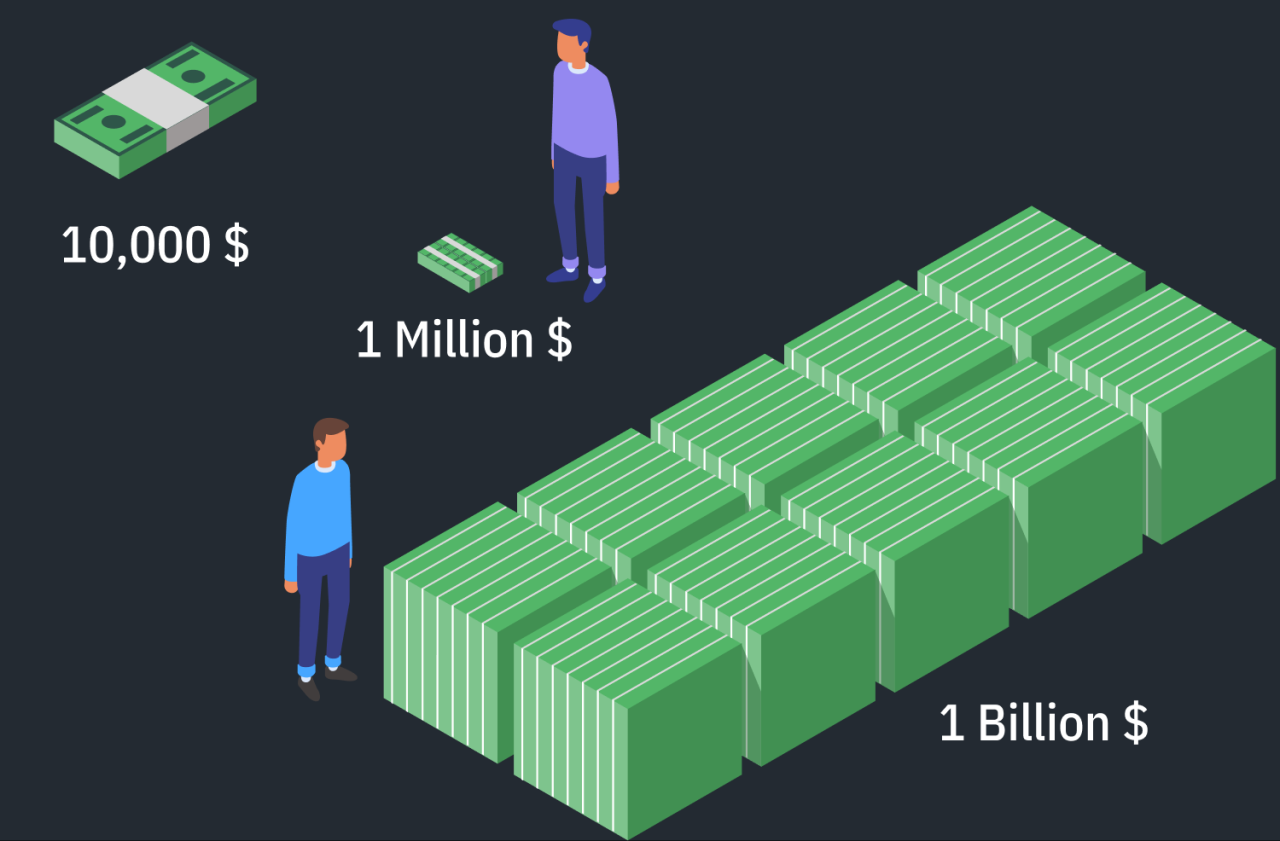
The path to building a billion-dollar startup is an intense marathon of iteration, risk, and massive effort.
It requires a market-defining idea, an obsessive focus on Product-Market Fit, and an unparalleled ability to scale operations and marketing channels—particularly SEO-driven content—at an exponential pace.
By prioritizing network effects, building strong technical moats, and mastering unit economics, entrepreneurs can transform a bold idea into a market-disrupting force and achieve the coveted hyper-growth necessary for unicorn status.