The era of quantum computing is no longer a theoretical horizon; it is a current reality rapidly transitioning from the laboratory to commercial applications. This revolutionary field, which harnesses the strange and powerful laws of quantum mechanics, is set to redefine computation, data security, and scientific discovery. Major breakthroughs in hardware stability, error correction, and the development of specialized algorithms are propelling the industry towards achieving quantum advantage—the point where a quantum computer definitively outperforms the best classical supercomputers for a specific, commercially relevant task. The race is on, and the economic stakes, especially in finance, chemistry, and artificial intelligence, are monumental.
Decoding the Quantum Advantage: Why It Matters
Classical computers store information as bits (0 or 1). Quantum computers use qubits, which can exist in a superposition of both 0 and 1 simultaneously. When multiple qubits are entangled, their states are linked, allowing the quantum system to explore exponentially more possibilities in parallel. This fundamental difference unlocks computational power for problems previously considered intractable.
A. Foundational Principles Powering the Revolution
The sheer speed and parallel processing capability of quantum systems stem from three core quantum mechanical phenomena:
A. Superposition: The ability of a qubit to be in multiple states at once dramatically expands the computational space. For instance, a system of just 300 entangled qubits could hold more information than the number of atoms in the visible universe.
B. Entanglement: This is the critical link between qubits, where the state of one instantaneously influences the state of another, regardless of the distance between them. Entanglement allows algorithms to correlate data points and explore complex, interconnected relationships simultaneously.
C. Quantum Tunneling and Interference: Quantum algorithms leverage interference to amplify the correct solution probability while canceling out the probabilities of incorrect ones. This allows the quantum computer to “tunnel” through complex, rough calculation landscapes to find optimal solutions much faster than classical brute-force methods.
Hardware and Software: The Race for Stability
The primary challenge in quantum computing has always been decoherence—the loss of the quantum state due to environmental interference. Recent advances in hardware stability and error mitigation are finally making commercial-grade systems viable.
A. The Multi-Platform Hardware Ecosystem
No single hardware technology has won the race, creating a rich and competitive ecosystem where different physical implementations are optimized for various use cases:
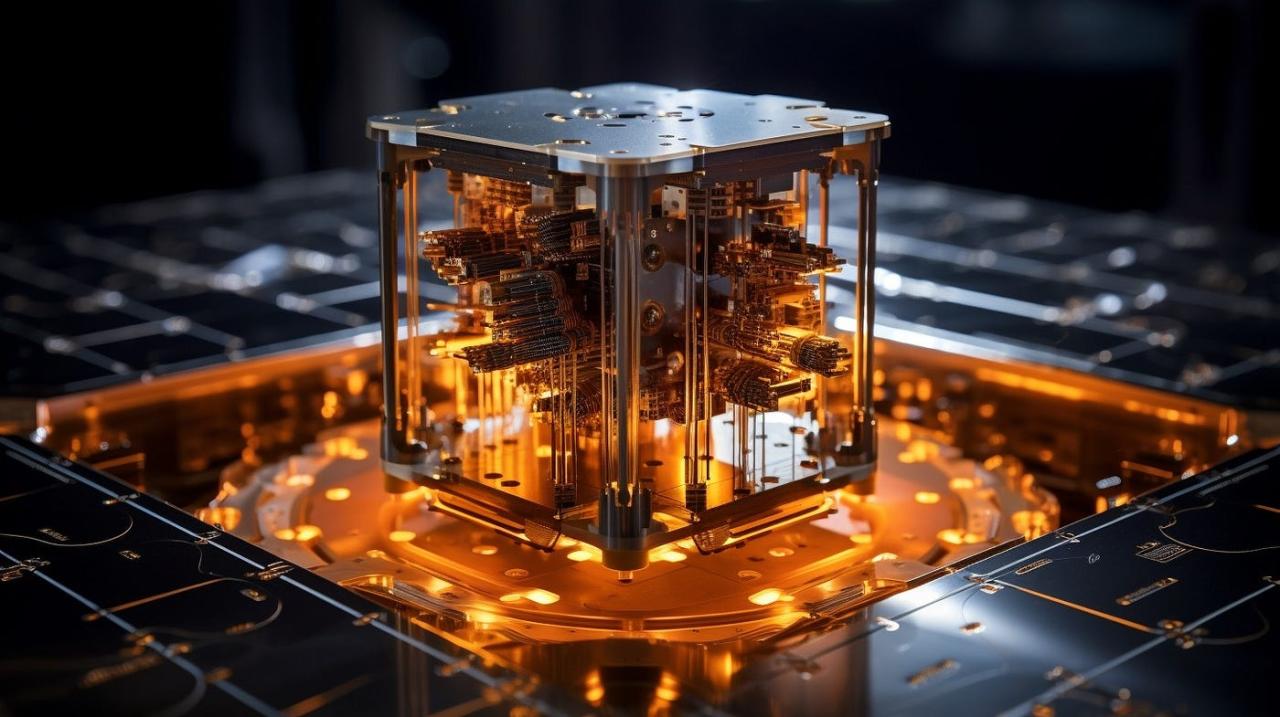
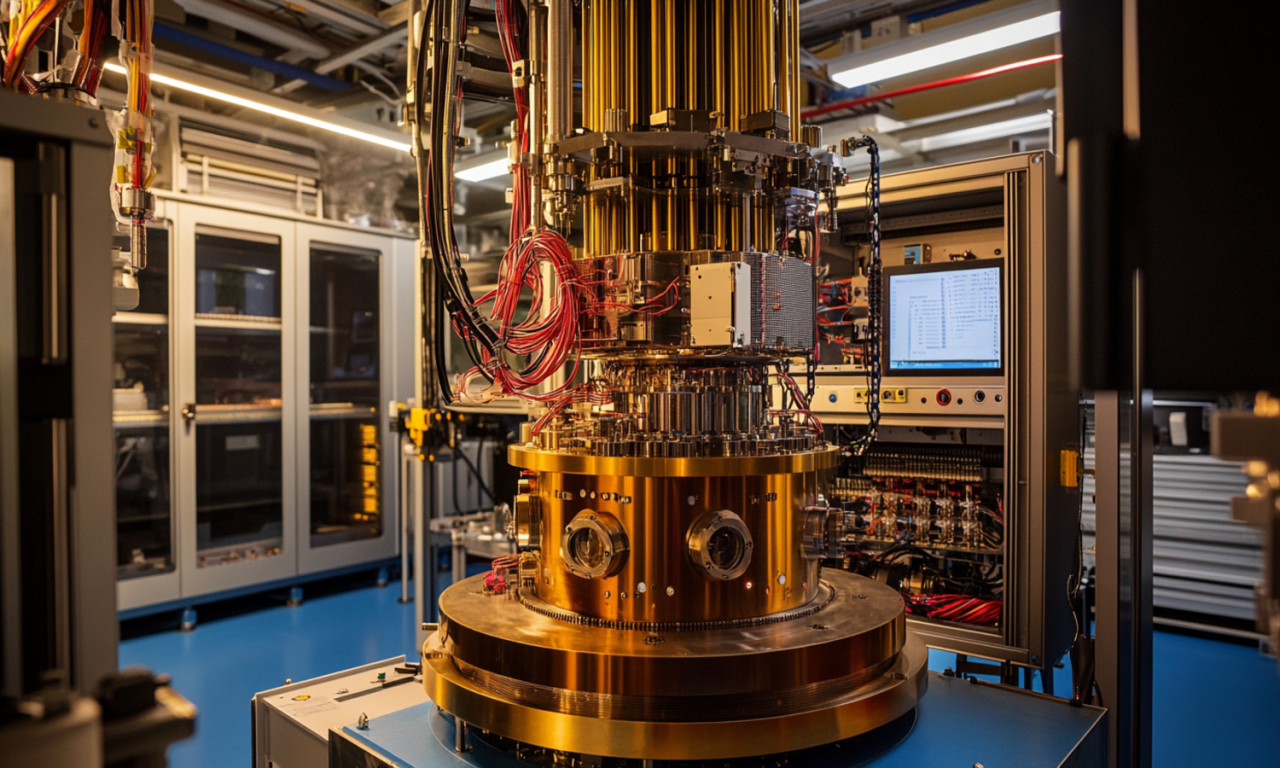
A. Superconducting Qubits (e.g., IBM, Google): These are loops of superconducting material kept near absolute zero (cryogenic temperatures). They are highly scalable but require massive, complex cooling infrastructure.
B. Trapped Ion Qubits (e.g., Quantinuum): Using electric fields to suspend individual atoms, these systems offer higher fidelity (lower error rates) and are known for their precision and connectivity. The commercial launch of high-accuracy systems like Helios in 2025 demonstrates their growing market readiness.
C. Neutral Atom Qubits (e.g., ColdQuanta): Utilizing arrays of atoms manipulated by lasers, this approach offers massive potential scalability, with companies successfully demonstrating systems with hundreds of individually controllable qubits.
D. Silicon-Based Qubits (Spin Qubits): Integrated into silicon chips similar to classical microprocessors, these offer the promise of leveraging existing semiconductor manufacturing infrastructure for future mass production.
B. The Error Correction Revolution
The critical hurdle of error correction is being actively addressed. The transition from physical qubits (prone to errors) to more stable logical qubits (a collection of physical qubits working together to maintain the quantum state) is defining the next generation of systems.
A. Algorithmic Error Mitigation: Software techniques are used to reduce noise and compensate for hardware imperfections, allowing current Noisy Intermediate-Scale Quantum (NISQ) devices to perform useful, albeit limited, calculations.
B. Fault-Tolerant Quantum Computing (FTQC): The long-term goal is FTQC, achieved through logical qubits. Recent architectural breakthroughs have shown that the necessary number of physical qubits to create one robust logical qubit is lower than previously thought, significantly accelerating the timeline for truly fault-tolerant, utility-scale quantum systems.

Industry Applications: Where Quantum Advantage Hits First
The immediate impact of quantum computing is emerging in complex simulation and optimization problems across critical global sectors.
A. Quantum Machine Learning (QML) and AI Acceleration
QML integrates quantum algorithms into classical machine learning workflows, promising exponential speedups in training times and the ability to analyze exponentially larger datasets.
A. Enhanced Pattern Recognition: Quantum computers are ideally suited for tasks like feature selection and dimensionality reduction in massive datasets, allowing AI models to identify subtle, complex patterns in financial markets or medical imaging that are invisible to classical algorithms.
B. Quantum Neural Networks (QNNs): Researchers are developing QNNs that leverage quantum principles to process and store information. These models could one day lead to faster training, better generalization from data, and the creation of the next generation of truly Generative Quantum AI (GenQAI) models.
B. Quantum Chemistry and Materials Science
Quantum computers can simulate molecular and chemical interactions with a precision and scale impossible for classical systems, leading to accelerated discovery.
A. Drug and Catalyst Discovery: By accurately simulating the electronic structure of molecules, quantum computers can predict how new drug candidates will bind to proteins or how novel catalysts will perform in industrial processes. This dramatically reduces the need for expensive, time-consuming lab experiments.
B. New Materials Design: Quantum simulation is paving the way for the discovery of next-generation materials, including:
- A. Room-Temperature Superconductors: Materials that conduct electricity with zero resistance without extreme cooling, revolutionizing power transmission and magnetic levitation.
- B. High-Efficiency Battery Electrolytes: Molecules optimized for greater energy density and faster charging in electric vehicle and grid storage batteries.
- C. Novel Solar Cell Components: Materials that maximize the conversion of sunlight into electricity, improving renewable energy efficiency.
C. Finance and Optimization
The financial sector is a primary beneficiary due to its reliance on complex, constrained optimization problems and massive data processing.
A. Portfolio and Risk Optimization: Quantum algorithms can efficiently manage large investment portfolios by optimizing hundreds of assets simultaneously under thousands of constraints, leading to superior risk management and capital allocation. Furthermore, they accelerate complex Monte Carlo simulations used for risk analysis from hours to minutes.
B. Dynamic Arbitrage and Fraud Detection: Quantum-enhanced AI models can process real-time market data to identify fleeting dynamic arbitrage opportunities and detect highly sophisticated, subtle patterns indicative of financial fraud that classical systems might miss.
Cybersecurity: The Quantum Threat and Defense
opment of quantum computers creates a dual-edged sword for cybersecurity—a monumental threat paired with a powerful defense.
A. The Post-Quantum Cryptography Imperative (PQC)
Quantum computers, specifically using Shor’s Algorithm, have the theoretical capability to break the current, widely used public-key cryptography (like RSA and ECC) that secures virtually all internet communication, financial transactions, and classified data.
A. Harvest Now, Decrypt Later: Malicious actors are currently harvesting encrypted data, anticipating the day—dubbed “Q-Day”—when powerful quantum computers will allow them to decrypt the stolen data retroactively.
B. NIST Standardization and Adoption: In response, governments and major technology firms are urgently transitioning to Post-Quantum Cryptography (PQC). The U.S. National Institute of Standards and Technology (NIST) has standardized new PQC algorithms that are resistant to quantum attacks. The industry transition to these new standards is a massive, multi-year undertaking for global organizations, with initial adoption accelerating in 2025.
B. Quantum-Safe Networking
The long-term solution lies in entirely quantum-based security protocols:
A. Quantum Key Distribution (QKD): QKD uses entangled or single photons to generate cryptographic keys. The fundamental laws of physics ensure that any attempt to intercept the key is immediately detectable, providing an unhackable layer of communication security.
B. The Quantum Internet: Global research efforts are focused on building a true Quantum Internet—a network capable of distributing quantum information (entanglement) over long distances. This will require the development of quantum repeaters to maintain the quantum state over metropolitan and even global scales, ultimately revolutionizing secure communication.
Democratization and The Next Decade
The trajectory of quantum computing is moving toward greater accessibility, which is crucial for maximizing its economic impact.
A. Cloud-Based Access and Hybrid Architectures
Leading quantum companies and cloud providers (e.g., IBM, Microsoft, Amazon) have made their quantum processors accessible via the cloud. This Quantum-as-a-Service (QaaS) model allows researchers, developers, and businesses to experiment with and deploy quantum algorithms without needing physical hardware, democratizing access.
A. Hybrid Quantum-Classical Systems: Most immediate applications use a hybrid approach, where a classical supercomputer handles the bulk of the processing and only offloads the most computationally intensive sub-routines (e.g., complex optimization) to the Quantum Processing Unit (QPU). Software platforms are being developed to seamlessly blend these two architectures.
B. The Developer Ecosystem
A new generation of user-friendly software platforms and quantum programming languages (like Python-based frameworks) is emerging, abstracting the complex physics away from the application developer. This rapid growth in the software layer is accelerating the creation of real-world quantum applications.
The confluence of massive hardware investment, groundbreaking error mitigation techniques, and the standardization of quantum security measures signals a definitive shift. Quantum computing is no longer merely a field of physics; it is a foundational information technology driving the next industrial and scientific revolution. Early adopters across finance, pharma, and energy are already positioning themselves to capture exponential competitive advantages.