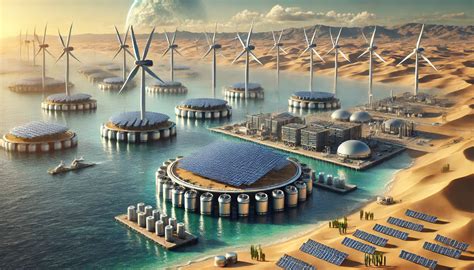
The world stands at a critical juncture, facing a dual challenge of climate change and a growing global energy demand. For decades, the conversation around clean energy revolved around familiar sources like solar panels and wind turbines. While these technologies have seen incredible adoption and efficiency gains, they represent only a part of the solution. The true revolution, the one that promises to fundamentally reshape our civilization, is happening right now in laboratories and research centers around the globe. This isn’t about incremental improvements; it’s about paradigm-shifting breakthroughs in energy generation, storage, and distribution that are poised to make clean, abundant, and affordable power a reality for everyone.
The future of energy is far more diverse and complex than most people imagine. It involves not only harnessing the power of the sun and wind more effectively but also unlocking the power of the atom in new ways, tapping into the Earth’s hidden heat, and reimagining how we store and transport energy. These innovations are not mere pipe dreams; they are technologies in active development, with some on the cusp of commercialization. This article will explore the most promising of these future energy breakthroughs, delving into their principles, challenges, and the profound impact they will have on our world.
The Holy Grail: Nuclear Fusion
For more than 70 years, scientists have pursued the dream of nuclear fusion. Often called the “holy grail” of clean energy, fusion is the process that powers the sun and stars. It involves forcing two light atomic nuclei, typically isotopes of hydrogen, to fuse together into a heavier nucleus, releasing a tremendous amount of energy in the process. Unlike nuclear fission—the technology used in today’s power plants—fusion produces no long-lived radioactive waste and carries no risk of meltdown. The fuel, hydrogen isotopes like deuterium and tritium, can be sourced from seawater, making it virtually limitless.
The primary challenge has always been achieving a sustained reaction. To get nuclei to fuse, they must be heated to extreme temperatures—over 100 million degrees Celsius—and contained under immense pressure. This is a state of matter known as plasma. Scientists have primarily focused on two methods to achieve this:
A. Magnetic Confinement: This approach, exemplified by the Tokamak reactor design, uses powerful magnetic fields to contain the superheated plasma in a donut-shaped vessel. The most famous project is the International Thermonuclear Experimental Reactor (ITER) in France, a massive collaboration involving 35 nations. ITER is not designed to generate electricity but to prove the scientific and technological feasibility of fusion for power generation. It is expected to produce more energy than is required to heat the plasma, a critical milestone known as “net energy gain.”
B. Inertial Confinement: This method involves using powerful lasers or particle beams to compress and heat a small pellet of fusion fuel to the necessary temperatures and pressures. The most notable example is the National Ignition Facility (NIF) at Lawrence Livermore National Laboratory in the United States, which recently achieved ignition, a moment when the fusion reaction generated more energy than was delivered to the target. While this was a monumental scientific achievement, it did not account for the energy needed to power the lasers themselves.
The landscape of fusion is rapidly changing, with private companies now accelerating the timeline. Ventures like Commonwealth Fusion Systems (CFS) and Helion Energy are attracting billions in private investment, using innovative designs and materials like high-temperature superconductors to build smaller, more affordable fusion reactors. These companies believe they can get to commercialization much faster than large-scale government projects. While a fully operational fusion power plant is still likely decades away, the pace of progress suggests it may become a reality within our lifetimes, fundamentally transforming the global energy landscape by providing a source of power that is clean, safe, and inexhaustible.
Redefining Nuclear Power: Advanced Fission and Small Modular Reactors (SMRs)
The public perception of nuclear power is often colored by past accidents and concerns over waste disposal. However, a new generation of advanced fission reactors is being developed that addresses these issues head-on. These aren’t just bigger versions of old technology; they are fundamentally different in design, safety, and efficiency.
One of the most promising concepts is the Small Modular Reactor (SMR). SMRs are a fraction of the size of conventional nuclear power plants, with a capacity of 300 MWe or less. Their “modular” design means they can be manufactured in a factory, shipped to a site, and assembled quickly, drastically reducing construction time and cost.
Here are some of the key advantages of SMRs:
A. Enhanced Safety: SMRs are designed with passive safety systems. This means they rely on natural forces like convection, gravity, and resistance to pressure to shut down safely in an emergency, without the need for human intervention or external power. This design makes a meltdown virtually impossible.
B. Flexibility and Versatility: Their small size allows them to be deployed in remote areas, at industrial sites to power specific operations, or integrated into existing grid infrastructure to replace aging fossil fuel plants. They can also be used for non-electric applications like desalinating water or producing hydrogen.
C. Reduced Waste: Many advanced SMR designs, such as Molten Salt Reactors (MSRs) and fast reactors, can “burn” existing nuclear waste from conventional power plants, significantly reducing the volume and half-life of radioactive material. This technology essentially turns a long-term liability into a valuable fuel source.
D. Lower Financial Risk: The smaller scale and shorter construction times of SMRs make them a more attractive investment. This reduces the financial risk associated with large-scale, multi-billion-dollar projects that can take decades to complete.
Beyond SMRs, other advanced fission concepts are being explored, including the Molten Salt Reactor (MSR). MSRs use a liquid fuel dissolved in a molten salt coolant, which acts as both the fuel and the coolant. This design operates at low pressure, making it inherently safer and more efficient. These innovations are poised to bring about a renaissance in nuclear energy, offering a powerful tool to decarbonize grids and provide reliable, round-the-clock power to complement intermittent renewables.
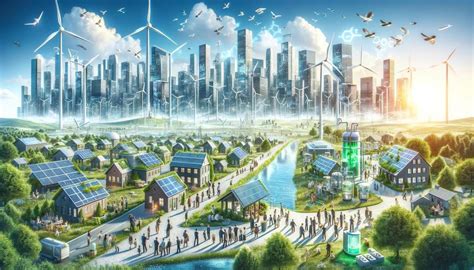
Solar’s Next Evolution: Perovskites and Space-Based Power
Solar energy has come a long way, but the next generation of solar technology promises to be even more transformative. Current silicon-based solar panels are highly efficient and affordable, but they have limitations. The future of solar will involve new materials and bold new applications.
Perovskite solar cells are a class of materials with a crystalline structure that has shown incredible potential for high efficiency and low manufacturing cost. Unlike rigid silicon panels, perovskite can be made into flexible, thin films. This opens up a world of possibilities for integrated solar power: building facades, windows, clothing, and even paint could generate electricity. While stability and durability in real-world conditions remain a challenge, ongoing research is rapidly overcoming these hurdles. The ability to “print” solar cells cheaply on a massive scale could make distributed solar energy a universal reality.
Meanwhile, a more audacious concept is gaining traction: space-based solar power. This involves launching massive solar arrays into geosynchronous orbit, where they can capture sunlight 24/7, unhindered by weather, clouds, or the day-night cycle. The collected energy would be converted into microwaves or lasers and beamed down to receiving antennas on Earth. The potential for this technology is staggering—a single space-based solar power station could generate as much electricity as a conventional power plant. While the engineering and cost challenges are immense, several nations and private companies are actively developing the technology, with China and Japan at the forefront of the race.
The Unsung Hero: Advanced Energy Storage
Even with the most efficient energy generation, the clean energy transition cannot happen without a revolution in energy storage. The primary limitation of renewables like solar and wind is their intermittency. The sun doesn’t always shine, and the wind doesn’t always blow. Next-generation storage solutions are the crucial bridge that will enable a grid powered entirely by renewables.
While lithium-ion batteries have dominated the market, new chemistries and technologies are emerging:
A. Solid-State Batteries: These batteries replace the liquid electrolyte of conventional batteries with a solid one, making them safer (no risk of fire), more energy-dense, and faster to charge. They are primarily being developed for electric vehicles but have immense potential for grid-scale storage.
B. Sodium-Ion Batteries: With concerns over the supply and cost of lithium, researchers are turning to more abundant materials. Sodium-ion batteries are slightly less energy-dense than lithium-ion but are significantly cheaper and can be built without relying on critical minerals, making them an attractive alternative for large-scale grid storage where space is not a limiting factor.
C. Flow Batteries: These batteries store energy in large tanks of liquid electrolytes, which are pumped past a membrane to create an electrical current. They are highly scalable, have a long lifespan, and are ideal for storing vast amounts of energy for extended periods, making them perfect for grid-scale applications.
Beyond batteries, other forms of storage are being scaled up. Compressed Air Energy Storage (CAES) and Liquid Air Energy Storage (LAES) use excess electricity to compress or liquefy air, which can then be released to spin a turbine when power is needed. Pumped Hydro Storage, a time-tested technology, is also being expanded, with new closed-loop systems that don’t require natural reservoirs. These diverse storage solutions will create a resilient and flexible grid capable of handling the variability of renewable energy sources.
The Hydrogen Economy and Green Fuels
Hydrogen has long been hailed as a clean fuel for the future, but the vast majority of hydrogen produced today is “grey hydrogen,” made from natural gas with significant carbon emissions. The breakthrough lies in “green hydrogen,” which is produced using renewable electricity to split water in a process called electrolysis. This process is becoming increasingly efficient and cost-effective as the price of renewable energy drops.
Green hydrogen is not just for fueling cars; it’s a versatile energy carrier that can decarbonize hard-to-abate sectors like long-haul trucking, shipping, and heavy industry. It can also be stored in vast quantities for seasonal energy storage, a crucial capability that batteries cannot provide. Companies are already building large-scale electrolyzer plants and developing the infrastructure needed to transport and use hydrogen. The rise of a true hydrogen economy could provide the final piece of the puzzle for a fully decarbonized energy system.

The Smart Grid and Decentralized Energy
The future of energy is not just about new sources; it’s also about a smarter, more resilient grid. Today’s grids are centralized and one-directional, designed to push power from large plants to consumers. The grid of the future will be decentralized, with power flowing in multiple directions from a variety of sources, including rooftop solar, community microgrids, and electric vehicles.
Smart grids use digital technology to monitor and manage the flow of electricity in real-time. This allows for more efficient use of power, reduces waste, and enables dynamic pricing that encourages consumers to use electricity when it’s cheapest and cleanest. It also makes the grid more resilient to disruptions. Innovations in grid management and software are just as important as the physical energy breakthroughs themselves.
A Comprehensive Transformation
The future energy landscape is a tapestry woven from multiple threads of innovation. There is no single silver bullet. The energy transition will require a diverse portfolio of technologies working in concert:
- Next-generation solar and wind for low-cost electricity generation.
- Advanced nuclear fission and fusion for reliable, on-demand power.
- Next-gen storage solutions to balance the grid and provide power when renewables are offline.
- Green hydrogen to decarbonize industry and transportation.
- A smart grid to manage it all efficiently.
Each of these breakthroughs is a puzzle piece. Together, they form a clear picture of a sustainable future—a future where energy is no longer a source of geopolitical conflict, environmental degradation, or economic inequality. The technologies are here. The investment is flowing. The timeline for their deployment is accelerating. The challenge now is to continue to innovate, to build the infrastructure, and to implement the policies needed to make this energy revolution a global reality. The future of energy is not a distant vision; it is a present reality, and it is more exciting and promising than ever before.