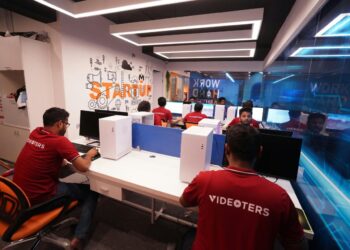
The global economic landscape is being dramatically reshaped by a select group of disruptive startups that are securing massive funding rounds. These substantial capital injections—often reaching unicorn status and beyond—are not merely financial transactions; they represent a fundamental vote of confidence in technologies poised to overturn entrenched industries, from finance and healthcare to logistics and energy.
This surge in venture capital (VC) funding is driven by an unprecedented appetite for high-growth potential businesses leveraging Artificial Intelligence (AI), SaaS (Software-as-a-Service) models, deep technology (Deep Tech), and Sustainable solutions. This comprehensive analysis dives into the strategic significance of this funding, the sectors seeing the most explosive growth, the factors attracting mega-rounds, and the ripple effects on the global economy and employment landscape.
The Anatomy of a Mega-Funding Round
A “mega-round” typically refers to a funding event exceeding $100 million. In the current climate, many disruptive firms are routinely closing rounds in the hundreds of millions, propelling their valuations into the multi-billion dollar range. Understanding what fuels this capital influx is crucial.
A. Driving Forces Behind Massive Capital Injections
Venture capitalists and institutional investors are chasing disruptive potential, recognizing that the rewards of backing a market leader far outweigh the risks.
A. Market Size and Scalability:
Investors are primarily targeting startups that address multi-trillion-dollar global markets, such as healthcare, logistics, or finance. The technology must demonstrate unlimited scalability, meaning its operational costs do not rise proportionally to its user base or revenue, exemplified perfectly by the SaaS model.
B. Proprietary Deep Technology:
Startups with defensible intellectual property (IP)—often in the form of unique AI algorithms, quantum computing breakthroughs, or novel biotech compounds—attract premium valuations. This “Deep Tech” creates significant barriers to entry for competitors.
C. Proven Unit Economics:
Before receiving late-stage mega-funding, startups must show exceptionally strong unit economics. Key metrics like low Customer Acquisition Cost (CAC) relative to high Customer Lifetime Value (CLV), and high gross margins, prove the business model is not only scalable but profitable at maturity.
D. Experienced and Visionary Leadership:
Investors place immense trust in the management team. A track record of successful scaling, combined with a clear, ambitious, and differentiated vision for market disruption, is essential to unlock the deepest pockets of capital.
B. Strategic Use of Hyper-Capital
Unlike early-stage capital used for product development, mega-round funding is deployed strategically to accelerate market dominance.
A. Aggressive Global Expansion:
Large funds are used to finance rapid geographical expansion, often simultaneously entering multiple new territories to capture first-mover advantage and consolidate global market share against slower-moving incumbents.
B. Talent Acquisition and Retention:
A significant portion of the capital is dedicated to the “war for talent,” securing top-tier engineers, data scientists, and specialized executives necessary to maintain a technological lead. High salaries, equity packages, and superior R&D infrastructure are non-negotiable investments.
C. Strategic Mergers and Acquisitions (M&A):
Disruptive startups often use their vast war chest to acquire smaller, innovative competitors or firms with complementary technology (acquihire) to instantly integrate new capabilities and eliminate potential competitive threats.
D. Massive Investment in R&D:
Funding is poured back into cutting-edge Research and Development (R&D) to accelerate the product roadmap, ensuring the startup maintains a significant technological gap over rivals and continues to redefine its industry.

Sectors Undergoing Explosive, Funded Disruption
While innovation occurs across the economy, several sectors have become magnets for mega-funding due to their vast inefficiencies and ripe potential for technological overhaul.
A. FinTech: Reshaping Financial Services
The financial technology (FinTech) sector continues to attract monumental funding, challenging traditional banking, lending, and payment systems.
A. Digital Banking and Neobanks:
Startups are building Neobanks (fully digital banks) that offer superior user experience, zero-fee structures, and AI-driven personalized financial advice, rapidly accumulating millions of users by offering a friction-less alternative to legacy institutions.
B. Decentralized Finance (DeFi) and Blockchain:
Massive capital is flowing into companies building infrastructure for Decentralized Finance and enterprise-grade Blockchain solutions. This technology promises to create transparent, programmable, and highly efficient financial markets, attracting investors eager to be part of the next generation of financial infrastructure.
C. InsurTech and Risk Management:
Startups in InsurTech are using AI and Big Data to rewrite insurance models, offering highly customized, usage-based premiums, and automating claims processing using machine learning, dramatically lowering operational costs and improving customer satisfaction.
B. HealthTech: Democratizing and Personalizing Care
The global healthcare market’s inefficiencies, combined with the criticality of its service, make it a prime target for transformative funding.
A. AI-Driven Drug Discovery:
Biotech startups are leveraging sophisticated AI algorithms and machine learning to analyze massive genomic datasets, dramatically reducing the time and cost associated with identifying new drug candidates and accelerating clinical trials. This area is seeing some of the largest, most strategic funding rounds.
B. Telehealth and Remote Patient Monitoring (RPM):
Funding is enabling the rapid expansion of Telehealth platforms and RPM devices. These solutions make specialized care accessible in remote areas and enable continuous patient data collection, leading to earlier intervention and improved outcomes, all while lowering the cost of care delivery.
C. Personalized Medicine and Genomics:
Companies focusing on genomic sequencing and tailor-made therapeutic interventions (personalized medicine) are securing huge funds to scale their testing and manufacturing capabilities, shifting the paradigm from reactive to proactive healthcare.
C. Enterprise Software (SaaS) and Cloud Infrastructure
The backbone of the modern digital economy is cloud-native software and infrastructure, driving immense VC interest in specialized SaaS providers.
A. Vertical SaaS:
Instead of general software, firms are building deeply specialized SaaS solutions tailored for specific industries (e.g., construction management, maritime logistics, or dental practice management). This deep functional focus provides superior tools that incumbents cannot easily replicate.
B. Cloud Security and DevSecOps:
With business operations moving entirely to the cloud, cybersecurity platforms and specialized DevSecOps tools that integrate security into the development pipeline are commanding high valuations due to the critical nature of their service.
C. Data Analytics and Business Intelligence (BI):
Platforms that offer unified, real-time data integration and intuitive AI-powered business intelligence dashboards are essential for data-driven enterprises, attracting consistent, large-scale investment.
Economic Impact and Market Transformation
The influx of capital into disruptive startups has cascading effects that reshape entire market structures, employment trends, and global competitiveness.
A. Job Creation and the Skilling Economy
While automation may replace some routine jobs, the overall effect of this startup boom is a net increase in high-value, specialized employment.
A. Demand for STEM Professionals:
Mega-funded startups drive exponential demand for professionals in Science, Technology, Engineering, and Mathematics (STEM), particularly in AI, machine learning, and advanced software development.
B. Rise of the “Upskilling Imperative”:
The rapid obsolescence of certain skills necessitates a global upskilling and reskilling movement. Educational technology (EdTech) startups focusing on vocational and digital skills training are also seeing increased funding to meet this demand.
C. New Economic Ecosystems:
These firms often create entire new service economies around their platform—e.g., developers, integrators, consultants, and specialized support staff—further boosting local and regional economies.
B. Challenging the Incumbents and Consumer Benefit
Disruptive startups inherently challenge the market power and profit margins of established, often slower-moving, corporations.
A. Forced Innovation:
The existential threat posed by agile, well-funded startups forces incumbent companies to accelerate their own digital transformation and innovation cycles, leading to more competitive markets.
B. Enhanced Consumer Value:
Ultimately, the consumer benefits through lower prices (due to higher efficiency), higher quality products, and significantly better user experiences (UX) across services like banking, shopping, and transportation.
C. Decentralization of Power:
These startups often break down monopolies or oligopolies by providing alternative platforms, thus democratizing access to services and information previously controlled by a few large corporations.
C. Global Capital Flow Dynamics
The source of mega-funding is shifting, reflecting the globalization of the innovation economy.
A. Sovereign Wealth Fund (SWF) Participation:
SWFs and large national pension funds are increasingly participating in late-stage VC rounds, seeking higher returns than traditional public markets and strategically investing in technologies that support national economic priorities (e.g., renewable energy, food security).
B. Cross-Border Investment:
Capital is flowing across continents, with US and European VCs actively investing in Asian and Latin American startups, and vice versa. This cross-pollination spreads best practices and accelerates the global adoption of disruptive technologies.
C. Shift to Private Markets:
With large rounds pushing valuations high, companies are staying private longer. This shift means more wealth creation is happening in the private markets before a public Initial Public Offering (IPO), fundamentally altering the traditional investment landscape.

The Next Frontier: Focus on Sustainability and Deep Tech
The newest wave of mega-funding is heavily weighted towards solutions addressing climate change and fundamentally difficult scientific problems.
A. Climate Tech and Renewable Energy
Investors are pouring money into technologies that directly address the climate crisis, recognizing this as the largest, most urgent market opportunity of the 21st century.
A. Carbon Capture and Storage (CCS):
Funding is accelerating the commercial deployment of technology designed to remove $\text{CO}_2$ directly from the atmosphere or industrial sources, a crucial component for meeting net-zero goals.
B. Next-Generation Battery Technology:
Companies developing solid-state batteries, sodium-ion batteries, or improved thermal management systems are receiving significant investment to lower the cost and increase the efficiency of electric storage for grid and mobility applications.
C. Sustainable Agriculture (AgriTech):
Mega-rounds are enabling the scaling of vertical farming, precision agriculture utilizing drones and AI, and alternative protein production to make the global food system more resilient and resource-efficient.
B. The True “Deep Tech” Bets
The highest-risk, highest-reward funding is directed toward foundational science and computing.
A. Quantum Computing Hardware and Software:
Funding is enabling the construction of commercial-grade quantum computers and the development of quantum algorithms that could solve complex optimization and simulation problems impossible for current supercomputers.
B. Advanced Robotics and Human-Machine Interaction:
Investment is flowing into firms creating autonomous systems that can operate in unstructured environments (e.g., construction sites, disaster relief) and advanced prosthetics/exoskeletons, blurring the line between human and machine capabilities.
Conclusion
The phenomenon of disruptive startups securing huge funding is a powerful economic barometer. It signals a wholesale shift in value creation, prioritizing technological innovation, rapid scalability, and global reach. These funded firms are the architects of tomorrow’s economy, driving efficiency, challenging monopolies, and, critically, dedicating resources toward solving some of humanity’s most complex challenges. The magnitude of this capital reflects the magnitude of the coming change.